ChatGPT SEO: How to Show Up When Buyers Ask ChatGPT
ChatGPT SEO is how brands get named in ChatGPT answers. Learn training memory vs live browsing, Bing retrieval, consensus signals, and prompt-coverage testing.
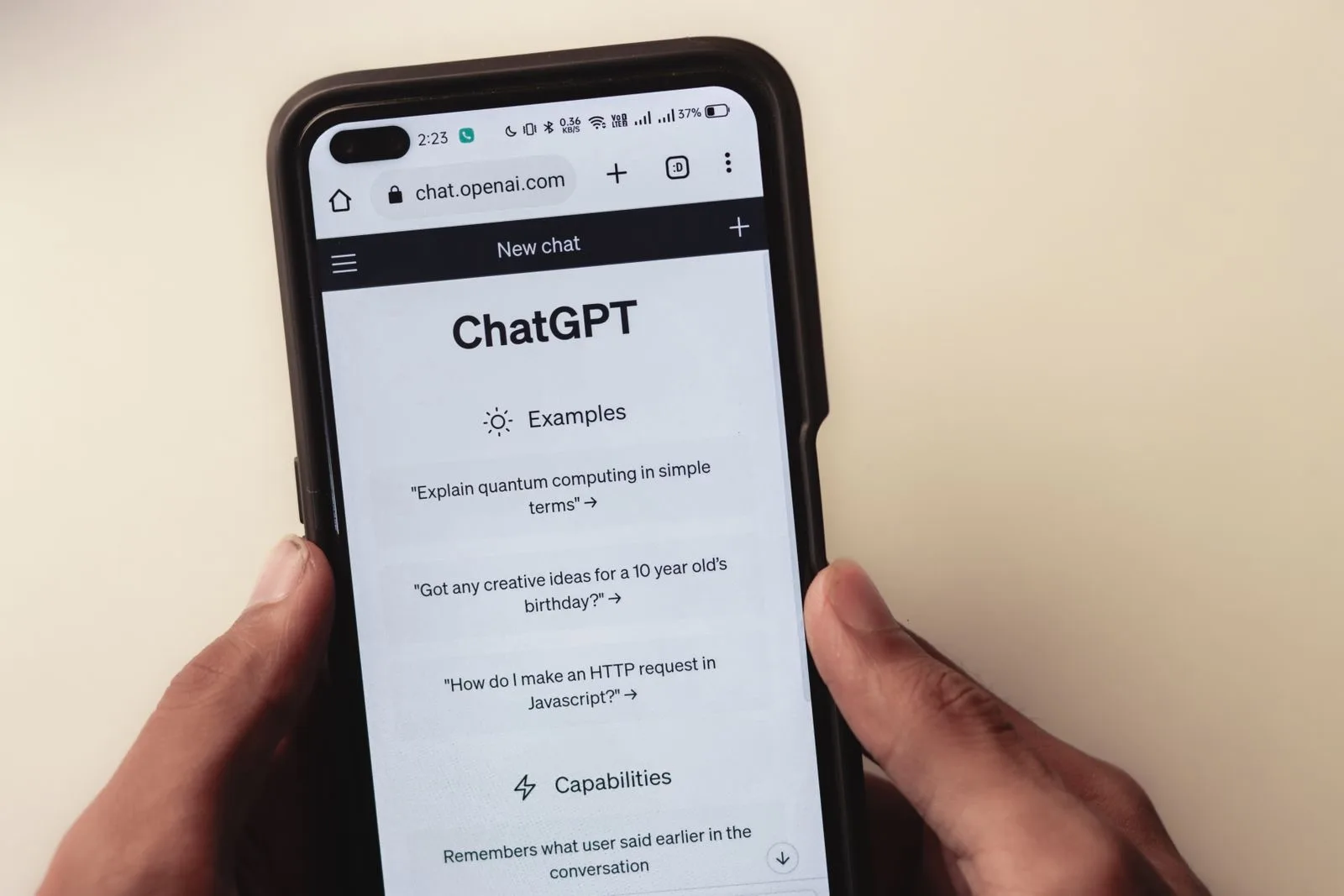
A growing share of buyers now open ChatGPT instead of Google when they want a recommendation, a shortlist, or a verdict. They type “best X for Y” and act on whatever ChatGPT names — and if your brand is not in that answer, you were never in the consideration set. ChatGPT SEO is the discipline of making sure you are the brand ChatGPT names, links, and trusts at the exact moment a decision gets made.
This is a practitioner-level guide. It assumes you already know what GEO is and want the field-tested mechanics: how ChatGPT actually produces answers, why Bing matters more than you expect, what “consensus” really means, and how to test coverage instead of guessing.
What Exactly Is ChatGPT SEO?
ChatGPT SEO is the practice of optimizing your brand, content, and broader web footprint so ChatGPT mentions and recommends you inside its generated answers — whether it is answering from memory or browsing the live web. It is a specialized branch of LLM SEO / GEO focused on one specific surface, and that surface behaves differently from Google in ways that change your tactics.
The core mental shift is this: you are no longer optimizing for a ranked list of ten links. You are optimizing for inclusion in a single synthesized paragraph that names a handful of brands. A brand can rank first on Google and be completely absent from the ChatGPT answer to the same question. If you want the conceptual difference spelled out, our breakdown of GEO vs traditional SEO covers it. Here we go deeper on ChatGPT specifically.
How Does ChatGPT Actually Answer a Question?
ChatGPT answers in one of two fundamentally different modes — from frozen training memory, or from live browsing — and you must optimize for both because you rarely control which one fires. Understanding the split is the single most important thing in ChatGPT SEO, because the tactics that win each mode barely overlap.
Mode 1: Training memory (the parametric answer)
When ChatGPT answers without browsing, it is drawing on patterns compressed into its weights during training — a large language model predicting the most probable, well-supported response. There is no live lookup. This mode has three consequences that practitioners consistently underestimate:
- It is frozen and lagging. The model only “knows” what was widely and consistently represented on the web up to its training cutoff. A brand that became prominent last month often does not exist in this memory yet.
- It rewards repetition and consensus. Things the model saw described the same way across many independent sources get encoded as durable patterns. A claim that appears once on your own site is statistical noise; a claim echoed across many third-party sources becomes part of the model’s “world.”
- You cannot edit it directly. You influence training memory only indirectly and slowly, by changing what the broad web says about you before the next training run.
Mode 2: Browsing / search (the retrieval answer)
When ChatGPT browses, it runs a search, reads a handful of live pages, and synthesizes an answer grounded in what it just fetched — classic retrieval-augmented generation. This mode is faster-moving and more winnable in the short term, because you are competing for retrievability and rank in a live index rather than waiting for a training run.
The practical rule: memory governs whether ChatGPT already believes you belong; browsing governs whether it can find and verify you right now. You need both. A strong entity that is invisible to live retrieval gets named only vaguely; a well-optimized page with no entity authority gets fetched but distrusted.
Which Search Engine Powers ChatGPT’s Browsing?
ChatGPT’s browsing and search features have historically leaned heavily on Bing-based retrieval, which means Bing is not a sideshow for ChatGPT SEO — it is core infrastructure. OpenAI has built its own crawling and search layer over time, but the practical takeaway for operators has stayed consistent: if Bing cannot find, index, and rank your page well, ChatGPT’s retrieval often cannot surface it either.
This is the most gatekept, least-glamorous tactic in the whole discipline, and most teams skip it because Bing feels irrelevant to their Google-centric reporting. Do not skip it.
The Bing checklist most teams ignore
- Submit and verify in Bing Webmaster Tools. Confirm your priority pages are actually indexed in Bing, not just Google. Indexation gaps between the two are common and quietly fatal.
- Check Bing rankings for your target prompts. Search the literal buyer questions in Bing. If you are on page three there, ChatGPT’s retrieval is unlikely to reach you.
- Fix Bing-specific crawl issues. Bing tends to be less forgiving of thin internal linking, slow rendering, and JavaScript-dependent content than Google. Server-rendered, link-rich pages retrieve more reliably.
- Do not block AI crawlers you want citations from. Audit
robots.txtand yourllms.txtpolicy so you are not accidentally excluding the very agents you want to cite you. See our guide to llms.txt and the official llms.txt spec.
You can sanity-check Bing-powered behavior directly inside Microsoft Copilot, which shares much of the same retrieval lineage and is a useful, free proxy for “what can Bing-powered AI see about me right now.”
Why Do Third-Party Mentions Matter More Than My Own Site?
ChatGPT trusts what many independent sources agree on, not what you say about yourself — so consensus across third-party mentions is the strongest lever you have over both training memory and retrieval. These models are, at their core, consensus machines. When many credible, unaffiliated sources describe you as “the leading X for mid-market Y,” that description gets reinforced as a pattern. When only your homepage says it, it reads as marketing.
What “consensus” practically means
In our own testing, and consistent with what practitioners broadly report, a few patterns hold up:
- Independence beats volume. Fifty mentions you placed yourself tend to move the needle less than a smaller number of genuinely independent ones — reviews, roundups, journalism, forum threads, analyst notes.
- Consistency is a multiplier. The model rewards being described the same way everywhere. Conflicting category descriptions across the web dilute your entity and make you harder to name confidently.
- Community platforms punch above their weight. ChatGPT frequently leans on discussion-heavy sources because they read as authentic consensus. We dig into why in why AI cites Reddit and community platforms.
This is why digital PR for AI citations has quietly become one of the highest-leverage GEO activities. You are not chasing links for PageRank; you are seeding the consistent, independent descriptions that become the model’s belief about you. Our digital PR & authority service is built around exactly this.
A risk flag: do not manufacture fake consensus. Spinning up fake reviews, sockpuppet forum posts, or AI-generated “independent” articles is detectable, brand-damaging, and increasingly filtered. The whole mechanism depends on authenticity; faking it is a short-term hack with long-term downside.
How Do I Become an Entity ChatGPT Recognizes?
You become a recognizable entity by giving ChatGPT unambiguous, machine-readable, cross-referenced signals that you are a specific, real thing — not just a string of words on a page. Entities are the backbone of how these systems organize knowledge, and a strong entity is what lets the model name you confidently rather than hedging with “some providers.”
The entity foundation checklist
| Signal | What to do | Why it matters for ChatGPT |
|---|---|---|
| Wikidata item | Create/claim a clean Wikidata entry with accurate properties | Wikidata feeds the structured backbone behind many knowledge graphs models reference |
| Wikipedia (if notable) | Pursue a page only if you meet real notability | Strong trust signal in training memory; never fabricate notability |
| Organization schema | Add Organization/sameAs markup linking your profiles | Helps engines connect your entity across the web via schema.org |
| Consistent NAP & descriptions | Identical name, category, and one-liner everywhere | Reduces entity ambiguity that makes models hesitate to name you |
| Authoritative profiles | Crunchbase, G2, industry directories, LinkedIn | Independent corroboration of who and what you are |
Get the structured-data layer right, treating clean markup as the cleanest public reference even though your target is ChatGPT. For the deeper playbook, see entity SEO: building authority AI trusts, and if you want this built for you, our entity & knowledge graph service handles it end to end. A clean, claimed Google knowledge panel is a useful adjacent signal, since it reflects a well-formed entity across the web.
What Content Format Does ChatGPT Prefer to Quote?
ChatGPT preferentially lifts content that is self-contained, factual, and structured so a single passage answers a single question without surrounding context. The model is extracting and recombining; the easier you make extraction, the more often you get pulled into the answer.
Make your content quotable
- Lead with the answer. State the conclusion in the first sentence of a section, then support it. Buried verdicts do not get extracted.
- Write self-contained claims. Each key sentence should stand alone if copied out, because that is exactly what happens.
- Match the real question phrasing. Use the literal language buyers type, including comparisons (“X vs Y”) and qualifiers (“for enterprise,” “under $50”).
- Add explicit specifics. Numbers, named features, supported integrations, and clear “best for” statements are easier to verify and quote than vague praise.
- Keep claims verifiable. Align with helpful-content principles; unverifiable hype gets distrusted by retrieval-mode answers.
This is the heart of answer engine optimization, and we operationalize it through conversational content designed to be quoted rather than just ranked.
How Do I Test Whether ChatGPT Mentions My Brand?
You test ChatGPT visibility with prompt coverage — systematically running the real spread of questions your buyers ask and measuring how often, and how favorably, you appear — not by checking one prompt and celebrating. A single lucky mention tells you nothing; coverage across the prompt space tells you everything.
Build a prompt-coverage test
- Map the prompt space. Write 30–100 real buyer prompts across the funnel: category questions, comparisons, “alternatives to competitor,” use-case and vertical-specific queries.
- Run them in both modes. Test with browsing on and off where possible, since memory and retrieval produce different results. Sample variations in phrasing.
- Score each response. Track presence (named or not), position (first vs buried), sentiment (recommended vs caveated), and accuracy (described correctly?).
- Compute share of model. Across the full prompt set, what percentage of relevant answers name you versus each competitor? This is your real visibility metric — see share of model explained.
- Re-test on a cadence. Answers drift as the index and model update; treat this as ongoing monitoring, not a one-off.
Two honest caveats. First, ChatGPT outputs are non-deterministic — the same prompt can yield different answers, so test in samples and look at rates, not single results. Second, no one outside OpenAI knows the exact ranking and selection logic. Anyone selling you a deterministic “ranking formula” is overclaiming. We work from observable, replicable patterns and adjust as the system changes — which is the honest posture this emerging field demands. Our AI citation tracking productizes this monitoring, and the AI visibility audit framework shows how to run the diagnostic yourself.
A Field-Tested ChatGPT SEO Priority Order
Do the work in the order of leverage, not the order of comfort — most teams over-invest in on-site content and under-invest in entity and consensus, which is backwards for ChatGPT. Here is the sequence we run:
- Entity foundation — Wikidata, schema, consistent descriptions, authoritative profiles.
- Bing/retrieval hygiene — indexation, rankings, crawlability for the prompts that matter.
- Third-party consensus — digital PR and genuine independent mentions describing you consistently.
- Quotable content — answer-first, self-contained, comparison-rich pages.
- Prompt-coverage monitoring — measure share of model and iterate.
Skip steps one through three and your beautiful content gets fetched but not trusted. That is the most common failure mode we see.
ChatGPT SEO is not mysterious, but it is genuinely different from ranking on Google, and the brands moving now are compounding an advantage their competitors have not noticed yet. If you want to know exactly where you stand — which buyer prompts already name you, where competitors are winning, and the highest-leverage fixes for your entity, your Bing footprint, and your consensus signals — start with our free AI visibility audit. We will map your real prompt coverage and hand you a prioritized plan to start showing up when buyers ask ChatGPT.